
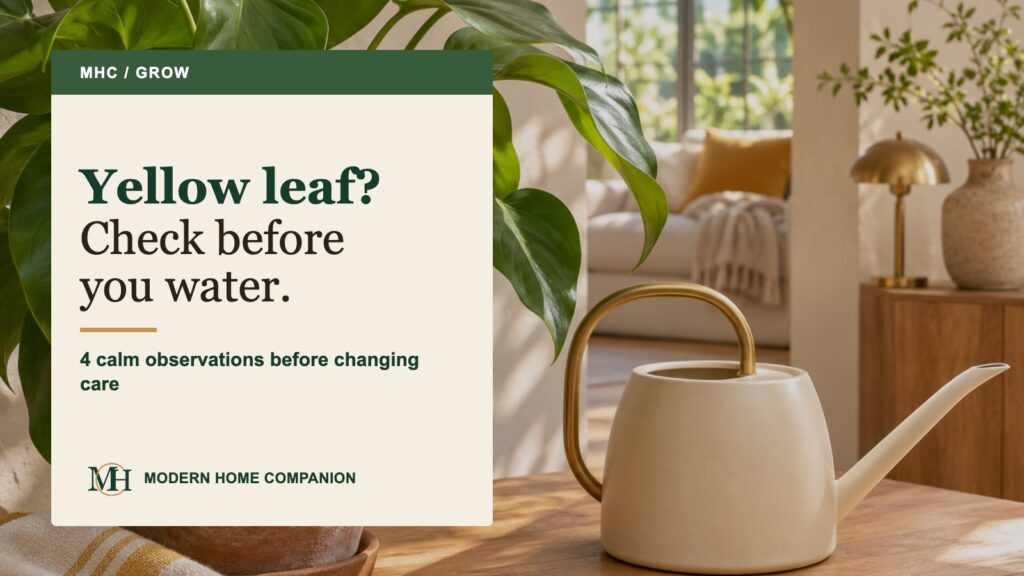
A yellow leaf can make the watering can feel like the obvious next step. But leaf color alone does not tell you whether a plant is thirsty.
Too much water and too little water can both be associated with yellowing. So can poor drainage, insufficient light, a sudden environmental change, natural aging, root problems, or insects and mites. The useful first move is not to guess at a treatment. It is to gather better clues.
Use these four checks before changing your plant’s care: moisture, drainage, the pattern of yellowing and anything that recently changed. This guide expands the Yellow Leaves Instagram carousel.
Why a yellow leaf is not a diagnosis
Yellowing is a symptom shared by many different plant problems. UC Statewide IPM lists inadequate light, low temperatures, overwatering, poor drainage, and soil-borne insects or diseases among the possible reasons leaves may yellow and drop. Its houseplant guide also notes that multiple factors can produce similar symptoms.
That overlap matters. Adding water to already-wet roots can make a drainage or root-health problem worse. Withholding water from a genuinely dry plant is not useful either. A single yellow lower leaf may also reflect normal aging rather than a whole-plant problem.
The goal of the four checks is not to diagnose every possible cause at home. It is to replace a reflex with observations you can compare with reliable care guidance for the plant you actually have.
1. Check moisture below the surface
Do not judge only by the color of the soil’s surface. It can look dry while the mix below remains moist, especially in a large pot, a cool room or a low-light location.
For many common houseplant containers, a simple first observation is to push a clean finger into the potting mix a knuckle or two deep. The appropriate depth and moisture level vary by plant and pot, so treat this as an observation—not a universal watering rule.
- Moist below the surface? Pause before adding more water.
- Dry below the surface? Check the needs of that plant before deciding how much and how often to water.
- Unsure? Compare the pot’s weight now with its weight after a known watering, or use a clean wooden skewer as another clue if suitable for the container.
Avoid changing the schedule from one surface glance. Record what you find and check again at a consistent interval.
2. Check where the water is going
Watering frequency is only part of the picture. Drainage and the condition of the potting mix affect whether roots receive air as well as moisture.
- Water collecting in a saucer or decorative cachepot
- A blocked or missing drainage hole
- Compacted mix that stays soggy for days
- Water running immediately down a gap at the side of a very dry root ball
- A nursery pot sitting inside another container where collected water is easy to miss
UC IPM notes that poor drainage and overwatering are associated with unhealthy roots and root rot. Potting media can also lose aeration as it ages and compacts. If the mix stays wet unusually long, investigate the pot, drainage path, light, temperature and plant requirements instead of automatically pouring again.
Do not perform aggressive root work based on one yellow leaf. If the plant is declining, the mix smells sour, stems are soft, or roots are visibly brown and mushy, seek species-appropriate guidance before repotting or treating it.
3. Look at the yellowing pattern
One affected leaf and a plant-wide pattern do not offer the same clues. Step back and look at the whole plant, then examine both sides of the leaves.
- Is the yellowing limited to one older, lower leaf?
- Is it appearing mostly in new growth?
- Is one side affected more than the other?
- Are many leaves changing at once?
- Are there spots, speckling, webbing, sticky residue, distorted growth or visible insects?
Patterns can narrow the questions, but they do not confirm a diagnosis by themselves. UC IPM’s diagnostic table connects different yellowing patterns with several possible issues, including light, moisture, root health, nutrition and sap-sucking pests. Document the pattern before choosing fertilizer, pesticide or a new watering schedule.
If you suspect pests, isolate the plant from nearby plants while you identify what is present. Use a treatment only after confirming the pest and checking that the product or method is appropriate for that plant and indoor setting.
4. Ask what changed
Plants respond to changes in their environment, even when the calendar says it is the usual watering day.
- Was the plant moved to a new room or window?
- Did seasonal light levels change?
- Did a heater, air conditioner or draft begin affecting it?
- Did someone else water it?
- Was the pot changed, or was it recently brought home or indoors?
- Did your usual watering routine change?
Sudden changes in light, temperature or humidity can be associated with leaf drop and other stress symptoms. Take a photo of the whole plant, a close-up of the affected leaves and the potting mix before you change several things at once. Then adjust one reasonable factor at a time and observe.
A simple yellow-leaf observation record
- Plant: Known name, or “not yet identified.”
- Moisture: Surface condition and what you felt below it.
- Drainage: Hole, saucer, collected water and how long the mix stays wet.
- Pattern: Older leaves, new growth, one side or much of the plant.
- Other signs: Spots, webbing, residue, insects, soft stems or odor.
- Recent changes: Light, location, temperature, pot or watering routine.
- Photos and date: Whole plant, affected leaf and container.
This record makes it easier to use a species-specific care guide or ask a local Master Gardener help desk, nursery professional or qualified plant specialist a useful question.
Then decide—based on the plant
After the four checks, identify the plant as accurately as you can and consult reliable guidance for that species. The right moisture range, light level and response can differ substantially among plants and containers.
- Do not water solely because a leaf is yellow.
- Do not add fertilizer before ruling out wet roots, light or pest problems.
- Do not change water, light, soil and location all at once.
A yellow leaf may not turn green again, and removing it does not resolve the underlying cause. Focus on the plant’s new growth, overall stability and whether the observed problem continues.
The next time you notice a yellow leaf, put the watering can down for a moment. Check moisture, drainage, the pattern and what changed. Better observations lead to a better next question—and a calmer decision.
Sources and boundaries
- UC Statewide IPM: Houseplant Problems
- UC Statewide IPM: Water Management and Pest Problems
- Penn State Extension: Diagnosing Poor Plant Health
This article provides general observation guidance, not a diagnosis for a pictured plant. Plant needs vary by species, container, environment and condition. Images are AI-assisted and illustrative; they do not show a diagnosed MHC plant or treatment result.

