
When you are surrounded by boxes, “finish the kitchen” can feel like a very large task. A smaller question is easier to act on: what needs to work tomorrow?
That is the Tomorrow Test. To decide what to unpack first after moving, choose one daily routine, list its essentials and give those items homes where you will use them. Try the routine, adjust what does not work, then move to the next one.
This guide expands our Tomorrow Test Instagram Reel. You can also download the free one-page moving checklist for broader moving preparation and a reminder to make your first routine work.
Start with immediate needs, then choose a routine
Before organizing, make sure essential personal needs and a clear route through the home are covered. Keep the things your household needs immediately accessible, and address any urgent problem rather than treating it as an unpacking task. Do not block doors or walking paths with boxes.
Then pick the next routine that would make daily life easier. That might be getting ready for bed, making breakfast, getting out the door or starting work. The right first choice depends on your household and when you arrive.
You are not choosing the most impressive room to finish. You are choosing one ordinary activity that you want to be able to do without searching through several boxes.
1. Choose one routine that needs to work tomorrow
Name the routine as an action. “Make breakfast” gives you a clearer starting point than “unpack the kitchen.” “Get ready for school” is more specific than “organize the entryway.”
Keep the first routine small. If you list everything your household does between waking up and leaving home, narrow it to one part. You can build on it after testing the first setup.
2. List the essentials for that routine
Write down what you will actually reach for. For a simple morning, the Reel suggests keys, a mug and a lunch box. Your list may be different: choose the items your particular routine requires, rather than copying somebody else’s list.
Separate essentials from things that can wait. You may need a mug for tomorrow’s tea, but you do not need to arrange every cup before that first drink is possible. A useful setup can be small and temporary.
Look for those essentials in the boxes or bags you already have. Keep unrelated discoveries together for their own later task instead of allowing each opened box to turn into a new organizing project.
3. Give essentials homes where you will use them
Put the items where the routine happens. A mug belongs near the place you will prepare your drink; a lunch box needs a sensible place in the lunch-preparation flow; keys need a consistent, appropriate location for leaving and returning. These items do not all need to sit together.
Use suitable existing shelves, drawers or storage before buying an organizing system. If an item needs a temporary home, make that choice clear to everyone who will use it and keep the area accessible.
For the doorway part of the routine, see how to set up an entryway drop zone. Start with daily essentials rather than filling the entry with every coat and bag.
A worked example: make tomorrow morning usable
Imagine that tomorrow involves a hot drink, preparing lunch and leaving the house. This is an example to adapt, not a record of a particular household’s move.
Hot drink: locate your mug and the supplies you use to prepare the drink. Choose a clear, suitable preparation spot and follow your appliance’s setup instructions. Leave the rest of the kitchen organization for another session.
Lunch: find the lunch box and the preparation essentials you need. Give the box a place that makes sense for filling it and putting it away.
Leaving: decide where the keys and everyday bag will go. Keep the route to the door clear. Check that the person who needs each item knows its location.
The result is a small set of connected actions you can carry out. The cupboards do not have to look finished for that morning to work.
4. Test the routine and adjust
Walk through the actions once. Where do you stop to search? Which item is in the wrong place? What is hard to reach or return? Adjust those small points before adding more categories.
If a missing item cannot be found right away, note it and decide how you will manage that part of the routine. Keep the test focused on making the next use possible rather than perfecting the entire room.
After the routine works, choose the next one. A bedtime setup, a usable work spot or a second household member’s morning may be the next useful step.
Keep a short list of what can wait
A “later” list can hold decisions that do not belong to the current routine: decorative arrangements, extra serving pieces or a storage layout that needs more thought. Recording the decision lets you return to it without treating it as today’s first task.
If several home tasks feel urgent, the guide to prioritizing a home to-do list can help you choose what comes after the essentials.
Start with tomorrow, then build from there
You do not need every room finished to make daily life easier. Choose one routine, find its essentials, give them practical homes and try the setup. That is enough for one useful unpacking session.
Get the free moving checklist, or save the Tomorrow Test Reel for the quick reminder: what needs to work tomorrow?
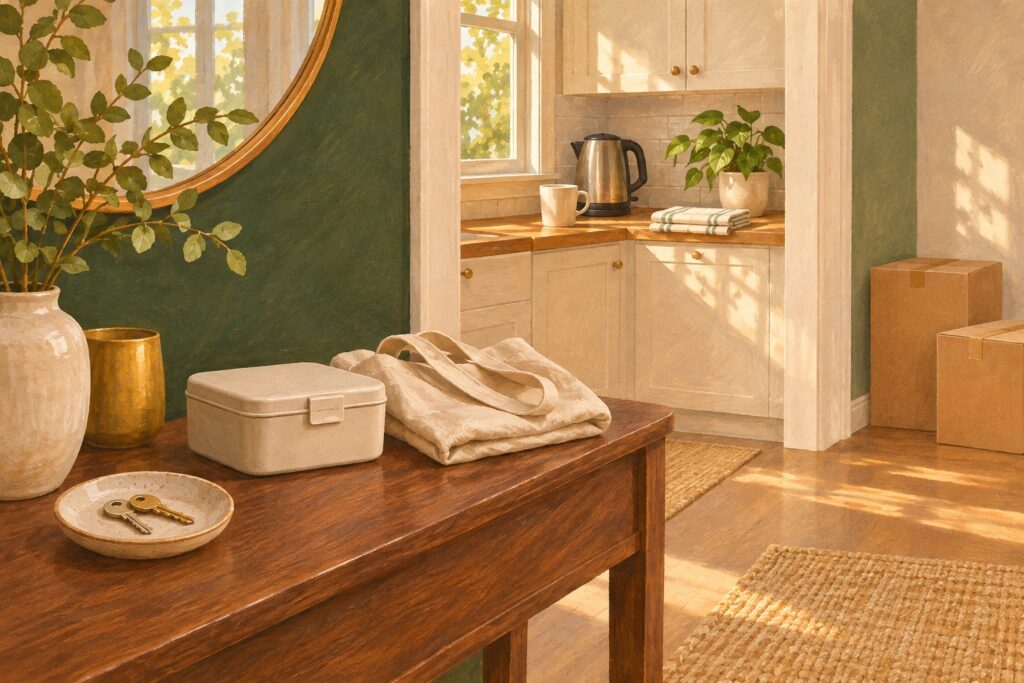
Featured image: AI-generated editorial illustration of routine essentials in a home being unpacked. It is not a photograph of the founder’s move or home.
Want help planning the whole move?
The Tomorrow Test Move Planner brings your budget, packing, moving-day details and first routines together in one 33-page workbook. Includes fillable and low-ink PDFs in US Letter and A4.
$10 introductory price · Digital download

