
Some home purchases come with a hidden subscription: your time. A vase needs dusting between every groove. A gadget needs another account. An organizer needs reorganizing. Furniture that looked perfectly proportioned in the store leaves you squeezing past it at home.
I love a beautiful home—and I love color. But I’m getting pickier about what comes through the door. These five home purchases that create more work are the ones I’m pausing over, along with the questions that help me decide whether something deserves space in our home.
1. Pretty décor that turns cleaning into a project
Tiny knick-knacks, faux florals and deeply grooved vases can look lovely together. They can also add many small surfaces to clean. Before choosing a piece, picture the ordinary task of keeping it looking the way you like.
Will a quick wipe work, or will you need to move several objects and clean each one separately? Check the care instructions before deciding. A detailed piece may be worth the effort when you truly love it; the point is to choose that effort consciously.
My buying filter: if cleaning it already feels like a project in the store, I pause. One object I enjoy can do more for a room than several pieces I only tolerate maintaining.
2. A prettier bin for an unsorted pile
A basket can contain clutter without resolving what belongs in it. If papers, cords, keys and unrelated objects are mixed together, buying matching containers can simply move the same decisions into nicer packaging.
Sort first. Measure next. Buy last. Decide what you are keeping, group it by use, and identify where those items need to live. Then check whether a container you already own works before buying another.
For a practical starting point, see five things that do not need their own organizer. Sometimes the useful change is giving something a clear home rather than adding storage.
3. A gadget that adds apps, accounts and hubs
A smart device should make a routine easier. If it introduces another app, another account and another hub, include that setup and ongoing attention in the purchase decision.
Check whether the exact device works with the setup you already use, what extra equipment it requires, and which features depend on an internet connection or subscription. Think about the other people who need to use it, too.
I want technology to reduce repetition without making a simple task harder to understand. Start with the routine you want to improve, then choose the tool. The MHC smart-home guides explore that approach.
4. Furniture bought without measuring the room
A chair can fit inside a room and still make the room difficult to use. Drawers need to open. Doors need clearance. People need to move around the furniture during an ordinary day.
Measure the piece and mark its footprint on the floor with a suitable removable tape, testing the tape on your floor finish first. Walk around the outline, open nearby drawers and doors, and picture someone sitting in the chair. Check the delivery route before ordering, too.
The useful measurement is more than the furniture’s width. It includes the space your household needs around it.
5. Something I only want because it is trending
My feed may like beige. I like color. A popular room can inspire me without deciding what belongs in my home.
Before buying a trend-led piece, imagine it without the styled photograph, the sale banner or everyone else’s enthusiasm. Would you still enjoy it with the things you already own? Does it suit how the room is used?
If I would not love it without the trend, I can leave it behind. That gives the pieces I do choose a better chance of staying useful and welcome.
Three questions to ask before buying something for your home
Before it comes home, I ask:
1. Where will it live? Name a specific place, including the clearance or storage it needs. If the answer is “I’ll find somewhere,” pause.
2. What will it take to maintain? Consider cleaning, setup, charging, replacement supplies and the attention it asks for. Decide whether that effort is worth what it adds.
3. Does it fit how we actually live? Picture a regular weekday, not a staged room. The purchase should support your household’s routines and preferences.
Give the purchase a job before giving it space
A good deal still needs good answers. Choose one item on your shopping list and work through the three questions before buying it. You may decide to buy, wait, use something you already own or skip it altogether.
Our wine-cubby spice-storage project is one example of finding a new use for an existing space.
See the original five home-purchase mistakes carousel on Instagram, then ask yourself: which purchase has asked for more time than you expected?
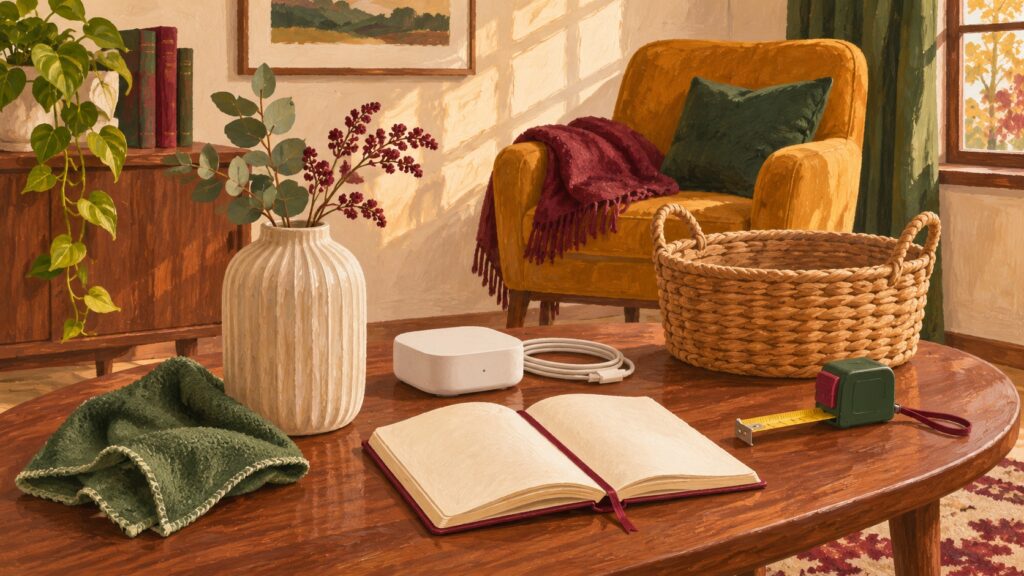
Featured image: AI-generated editorial illustration; it does not depict my home or specific products.

