
A toilet can leak without a puddle, a drip or a sound. Water may be slipping from the tank into the bowl while the bathroom looks perfectly normal. A simple dye test can help you spot that hidden movement.
This is the longer guide to our silent toilet leak Instagram carousel. Start with one conventional tank toilet, a timer and a suitable dye product. The check takes about 10 minutes of waiting; any repair is a separate next step.
Before you start
Use this method only for a conventional toilet with an accessible water tank. Check your toilet manufacturer’s instructions and the dye product’s directions first. If your toilet has a concealed tank, pressure-assisted system or unfamiliar mechanism, ask the manufacturer or a plumber how to check it. Do not open a sealed pressure vessel.
Gather a toilet-compatible leak-detection dye tablet or a few drops of food coloring, a timer and a place to record the result. Choose a time when nobody will need to flush. Carefully lift the porcelain tank lid with both hands and set it securely on a protected, stable surface. If it is awkward or heavy, get help.
How to do the 10-minute toilet dye test
1. Start with clear bowl water. Let the toilet finish refilling after its last flush. Make sure you can distinguish the test color from any existing cleaner or discoloration. Do not mix dye with cleaning chemicals.
2. Add the dye to the tank. Following the product and toilet instructions, add a suitable dye tablet or a few drops of food coloring to the water in the tank behind the seat. Do not put it directly into the bowl: that would make the result impossible to interpret.
3. Wait 10 minutes without flushing. Set your timer and let others know the toilet is being checked. Leave the internal parts alone during the wait.
4. Look in the bowl. If the test color appears there without a flush, water is leaking from the tank into the bowl. Record what you actually see.
5. Flush immediately afterward. This helps prevent staining. Follow any additional cleanup directions on the dye product and replace the tank lid carefully. The EPA’s WaterSense leak-check guidance describes the 10-minute food-coloring test and the flush-afterward step.
What your result means
Color appeared in the bowl: the test indicates tank-to-bowl leakage. It does not identify the exact failed part. A worn flapper or valve seal is one possible cause, but toilet designs differ. Check the model’s troubleshooting guidance before buying parts, or share the result with a plumber.
No color appeared: you did not observe tank-to-bowl leakage during this check. That does not rule out an intermittent problem or a leak elsewhere. If the toilet still refills unexpectedly, runs continuously or shows moisture outside the tank or bowl, follow up rather than treating the test as an all-clear.
When to ask for help
Contact a plumber or your property manager if the test is positive and you are unsure how to proceed, the mechanism is unfamiliar, or running and refilling continue. Visible water on the floor needs attention separately; this dye test is not a way to diagnose the source of an external leak. Renters should report the observation and follow their property’s repair process.
You can keep the message simple: “I tested the guest-bathroom toilet without flushing. After 10 minutes, the blue test color appeared in the bowl.” Add the date and any other symptoms. That gives the person helping you a clear observation without guessing a diagnosis.
Make the check easy to remember
The EPA recommends checking toilets for silent leaks at least once a year. Add a reminder to your home-maintenance calendar and note which toilets you checked. A rarely used guest bathroom is an easy place to overlook.
If a repair follows, record the work, provider and paperwork in your home repair log. Include the test result and any follow-up advice you actually receive.
For a different kind of water problem, see where to place water leak sensors. A floor moisture sensor and this tank-to-bowl dye test check different things; neither replaces the other.
Start with one toilet, finish the check and record the result. Save the Instagram carousel if you want a quick reminder of the steps.
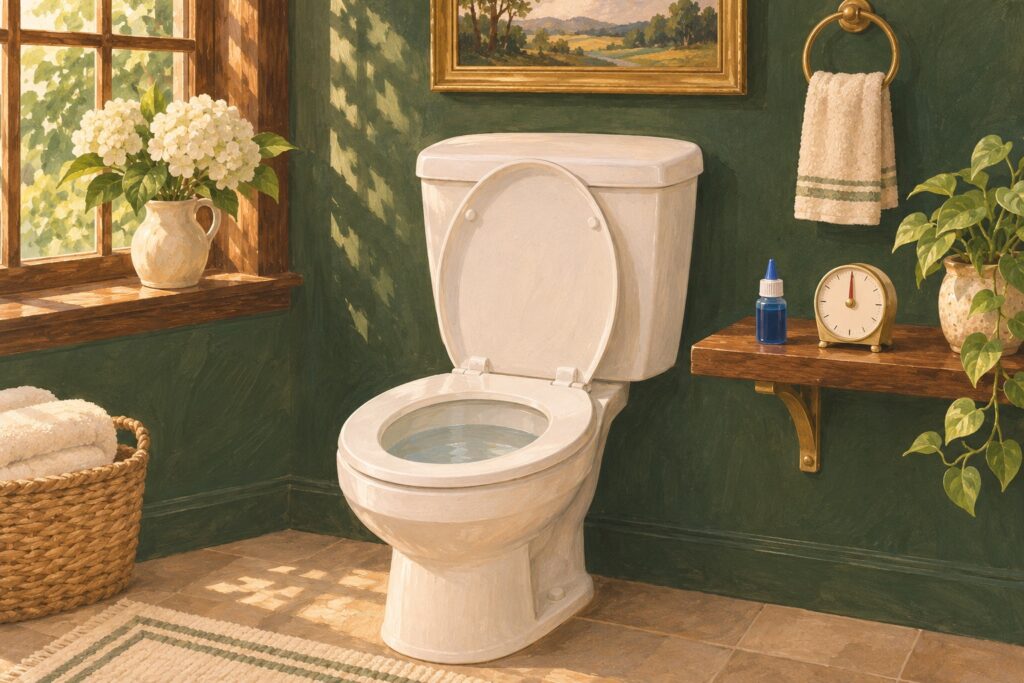
Featured image: AI-generated editorial illustration, not a photograph of a real leak test or a plumbing diagram.

